Service · 02 of 04
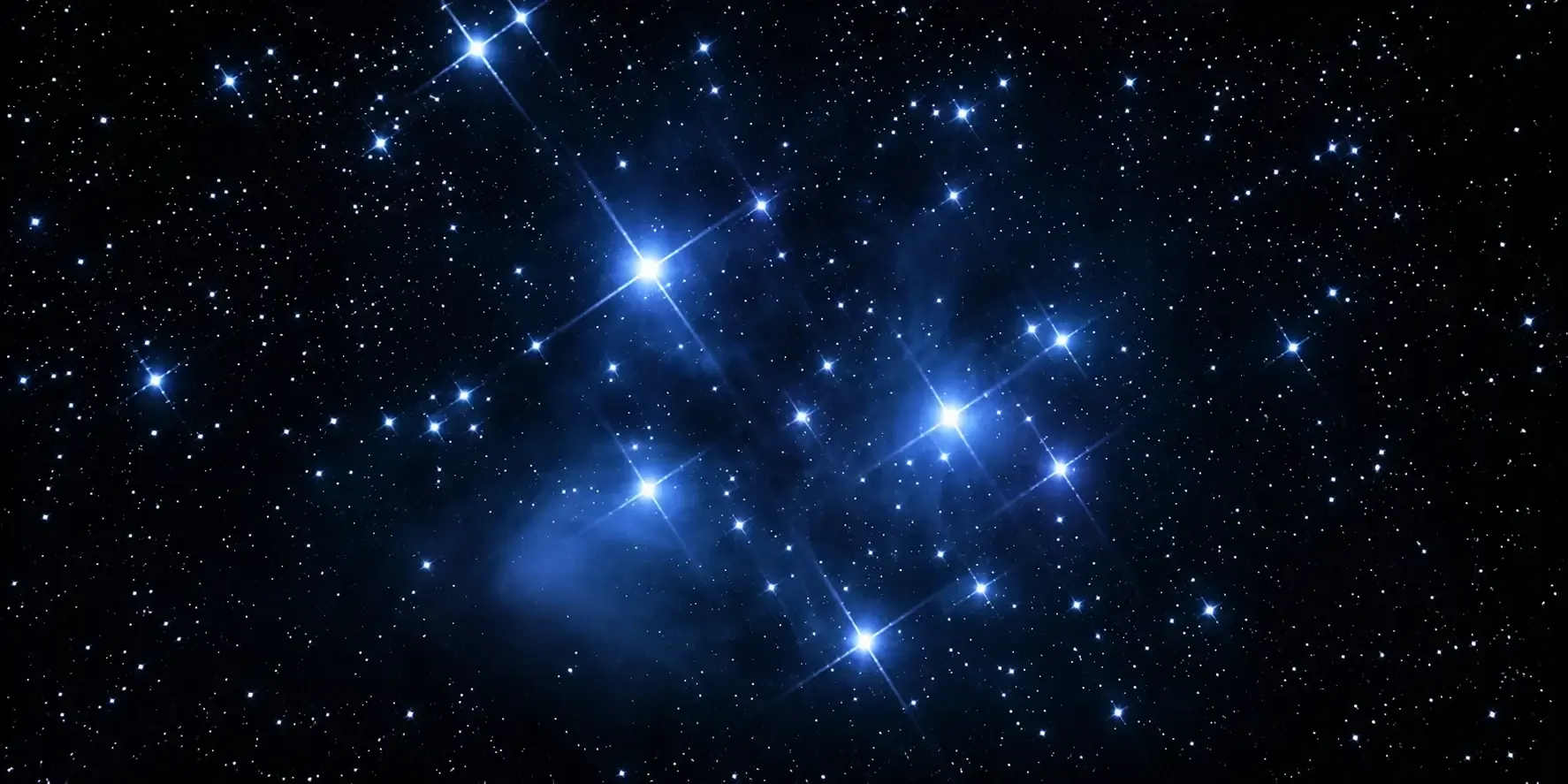
The night sky, on your own ceiling.
Transform your space with our bespoke starry ceilings. We specialise in bringing your ideal design to life: choose the background colour (from white to black), add large-format printing, and customise the shape (round, oval and more). Bring movement to your ceiling with realistic comet and shooting-star effects. We tailor every project to your needs and budget for the perfect solution.
Thousands of light strands guided by a single projector.
Starry effect
We create our starry sky with a hidden LED source that lights up a bundle of high-quality optical fibres. The system carries no electrical current at the light points, so it's 100% safe in wet zones like pools, saunas and outdoor terraces. A fully silent technology, cool to the touch, with a high-durability projector rated for up to 60,000 hours of life.
Ceiling finish
The fibres are installed together with a stretch ceiling fitted onto perimeter profiles. The install is done “cold” — no gas heater needed in the room. When acoustic treatment is required, we can switch to a micro-perforated finish: this material improves sound absorption and even lets us conceal Atmos speakers behind it.
Control / VFX
Lighting control is managed easily from a mobile app and a remote. Adjust colours, set intensity and pick light modes like a twinkle effect. You can also programme moving sequences that simulate shooting stars, comets or the flicker of a galaxy.
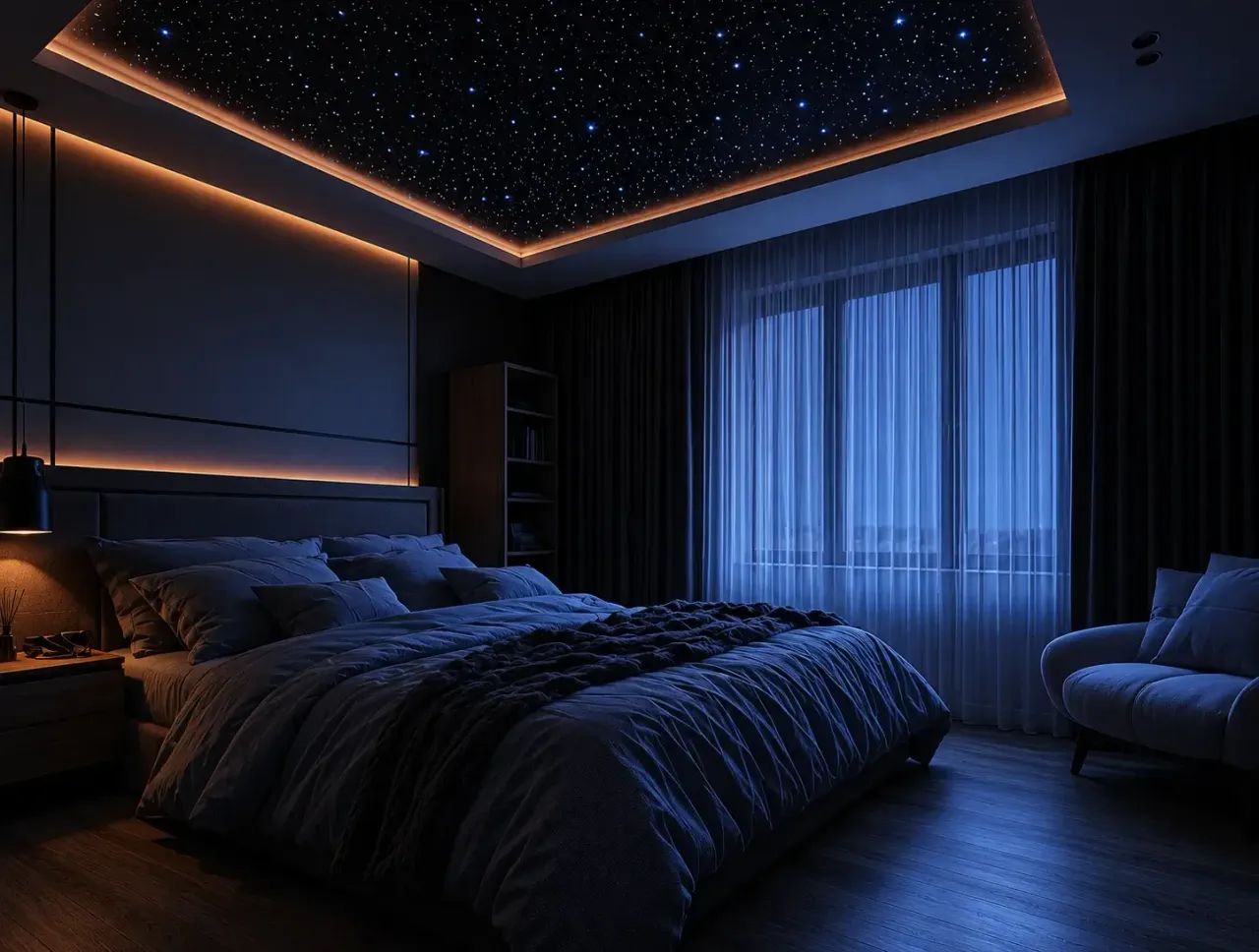
Bedrooms & children's rooms
Turn your room into an oasis of calm beneath the universe. Ideal for a magical, relaxing, fully personalised atmosphere at bedtime.
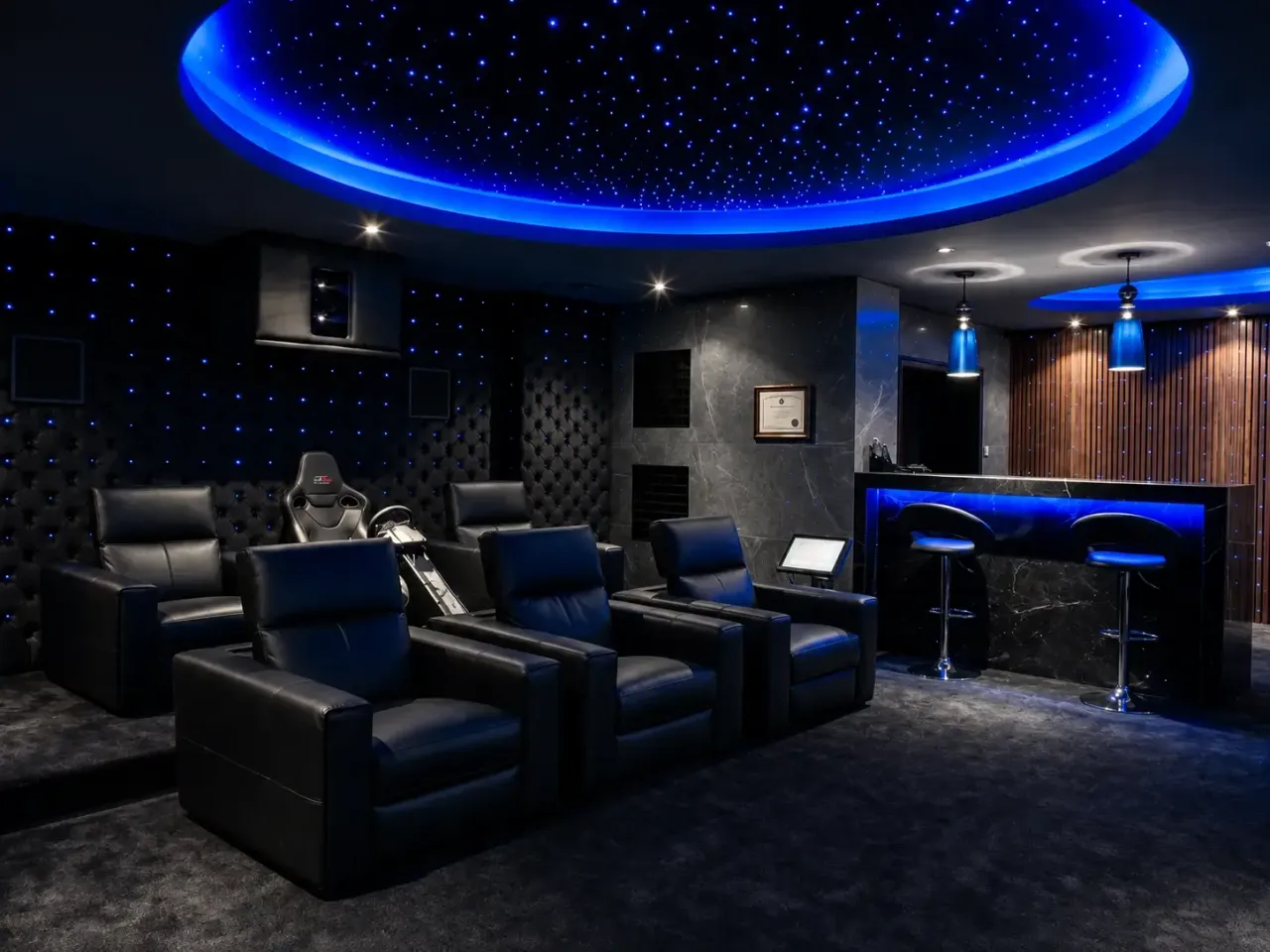
Cinema under the stars
This lighting system completely changes the atmosphere and turns your films into an intergalactic experience — and improves cinema sound by reducing echo.
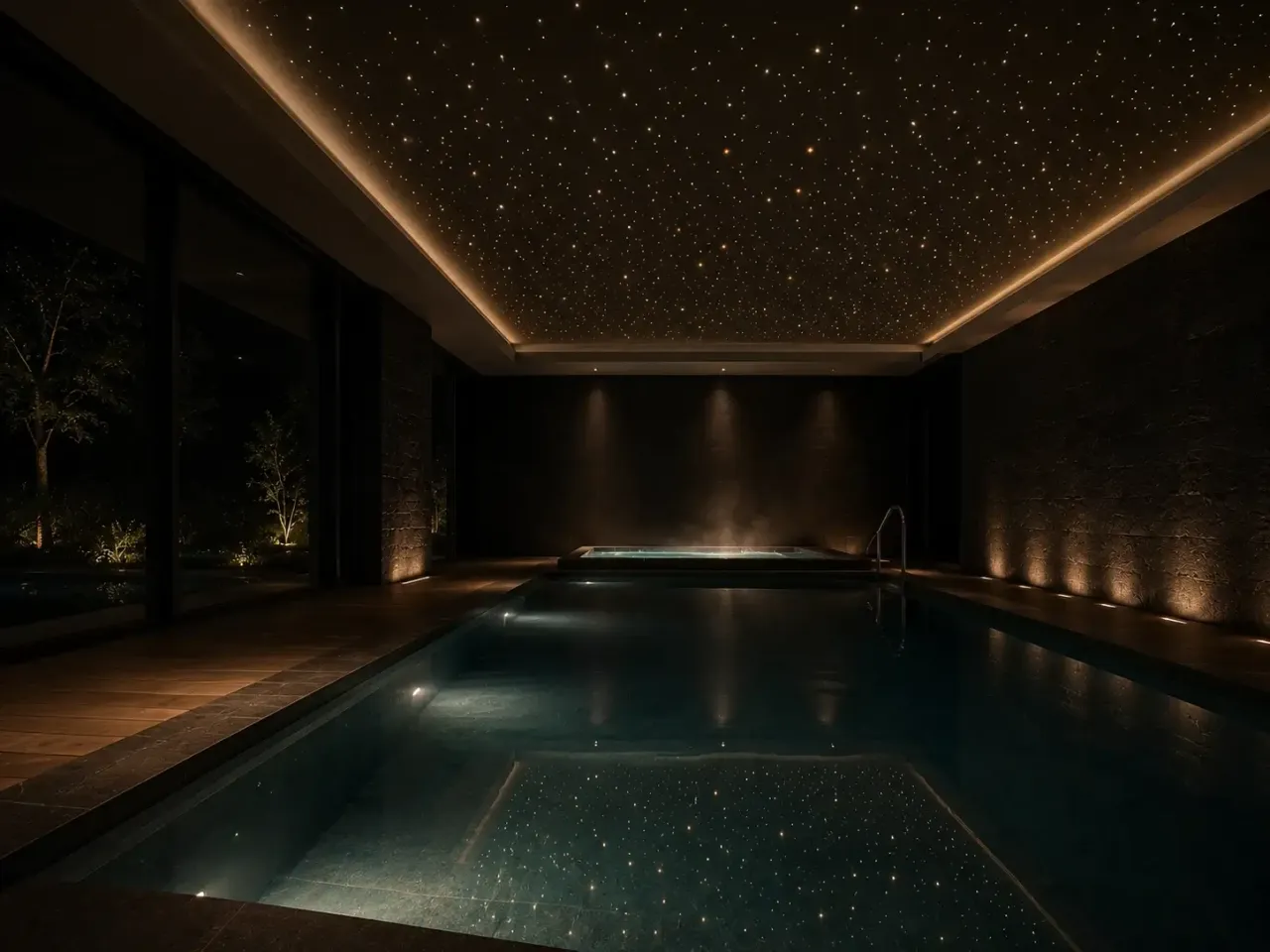
Pools & spa
Moisture-resistant, antibacterial material with the option of outdoor installation. Prevents mould and fungus growth in the fabric.
A selection of our recent projects.
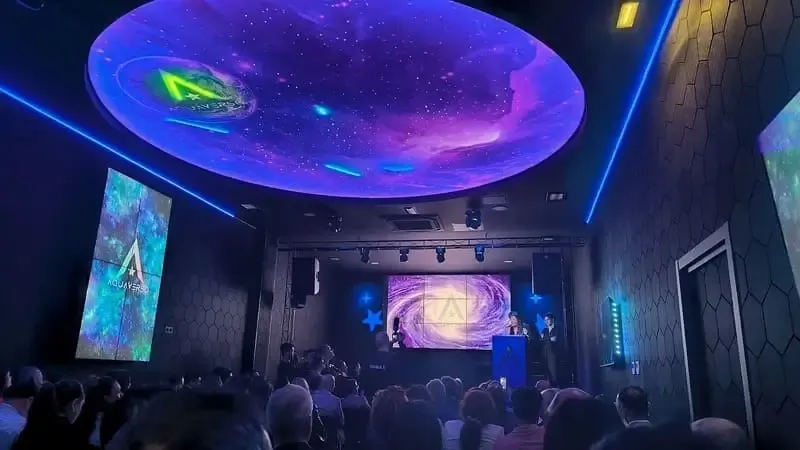
Aquaverso
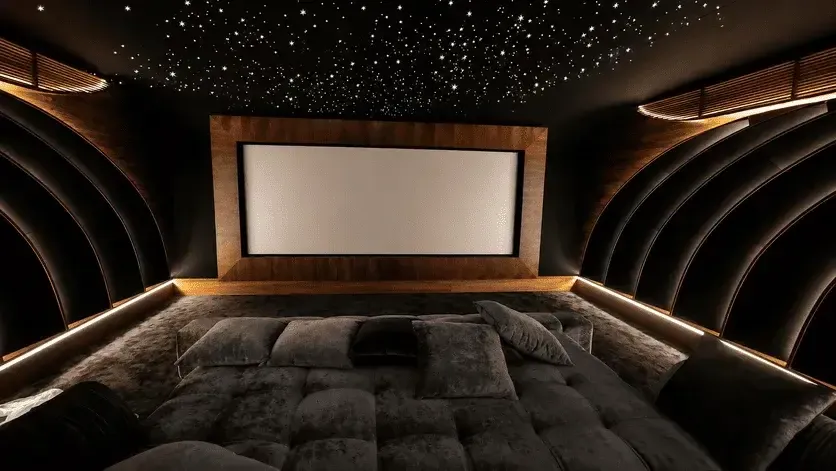
Víctor
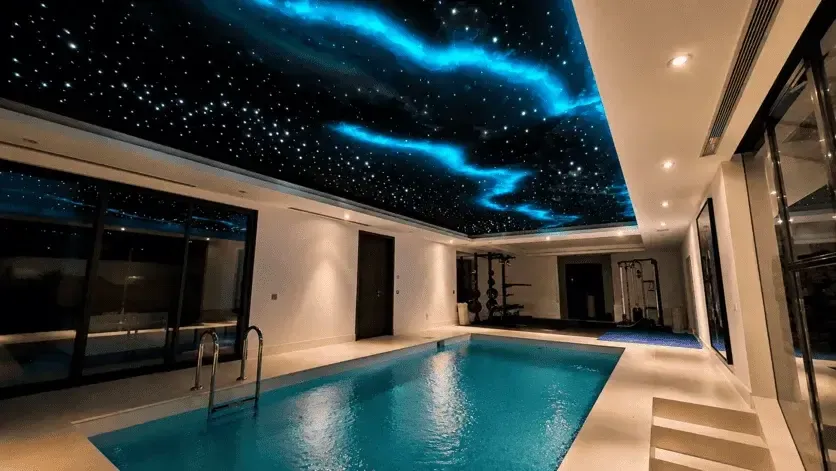
Villa Lorenzo
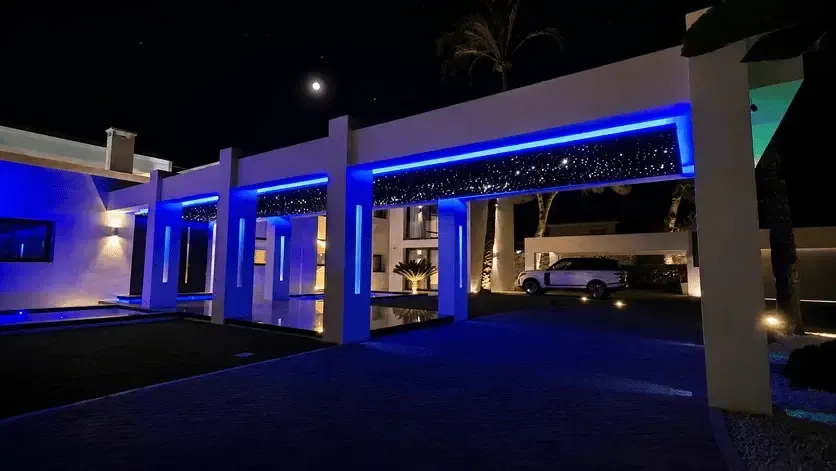
Villa James
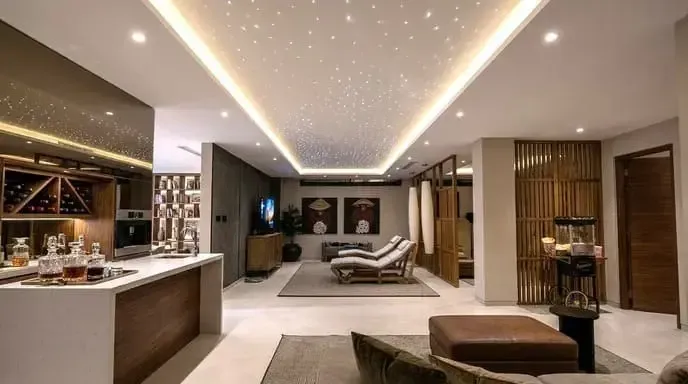
Elena
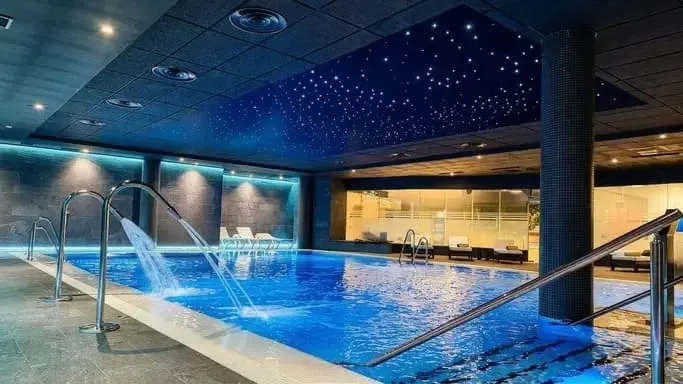
Bakour Oh Nice Costa del Sol
Fibre-optic or LED?
We work exclusively with fibre-optic. Thanks to our single-engine light source, we achieve a brightness above that of conventional plastic-needle LED systems. We also offer a realistic twinkle effect — something LED can't replicate — for an authentic starry sky.
What ceiling height is required?
For an optimal install, the ideal is 10–20 cm of plenum. That margin lets us integrate acoustic absorption panels if the project calls for it. In rooms with low ceilings, we can install with as little as 4 cm of drop.
What colour of stars should I choose?
Most of our installs use RGB LED light engines. Via a mobile app or remote, you can select any colour, programme colour-change effects and switch on the twinkle mode.
Can it be installed over an existing ceiling?
Yes. We can mount over plasterboard or plaster with a drop of just 4 cm. That space is enough to fit the perimeter profiles and distribute the fibre optics. We're also fast: a 12–15 m² starry ceiling is typically ready in a single day.
What maintenance is required?
The fibre-optic strands need no maintenance at all. The light engine has a replaceable LED module (15–20 years of life under normal use). The stretch ceiling itself needs no special care — the tension of the membrane is guaranteed for life. We also include a 24-month warranty on the entire installation.
Watch our stars twinkle.
Tell us where you want to see the stars.